Return → corners
Profit on the capital actually put to work, spot and perps together. A weak season rounds the corners off.
Robinhood Chain · Season 1
BlockTCG reads a trader's record straight off the chain, grades it 1 to 10, and seals it in a slab. The grade is fixed for the season. The price floats, the way a trading card's does.
Rendered in Blender from the same files that make each NFT. Specimen slab: no real trader.
The grade
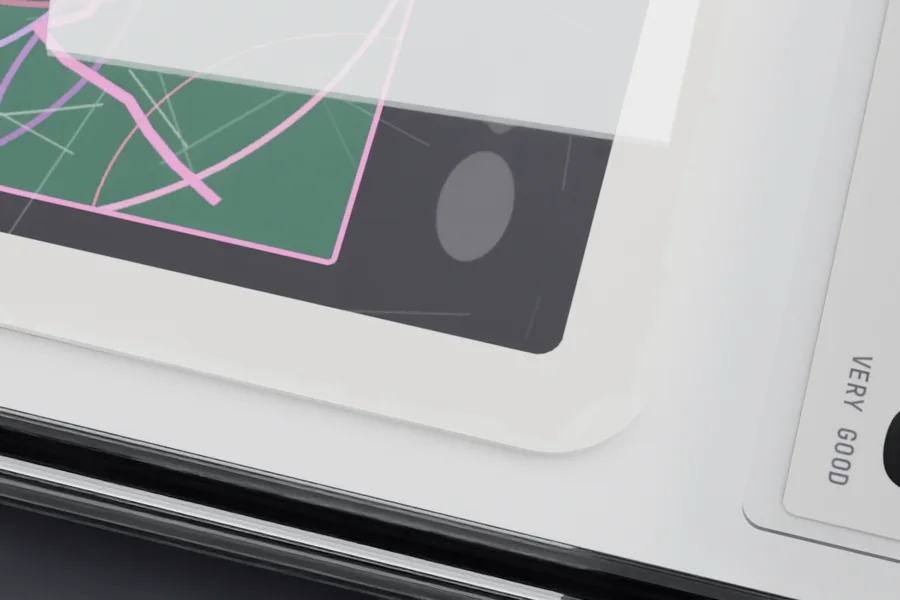
Every slab is drawn from the trader's actual season. A great record comes out sharp and centred. A rough one comes out with soft corners, whitened edges and a scuffed face. The acrylic never wears.
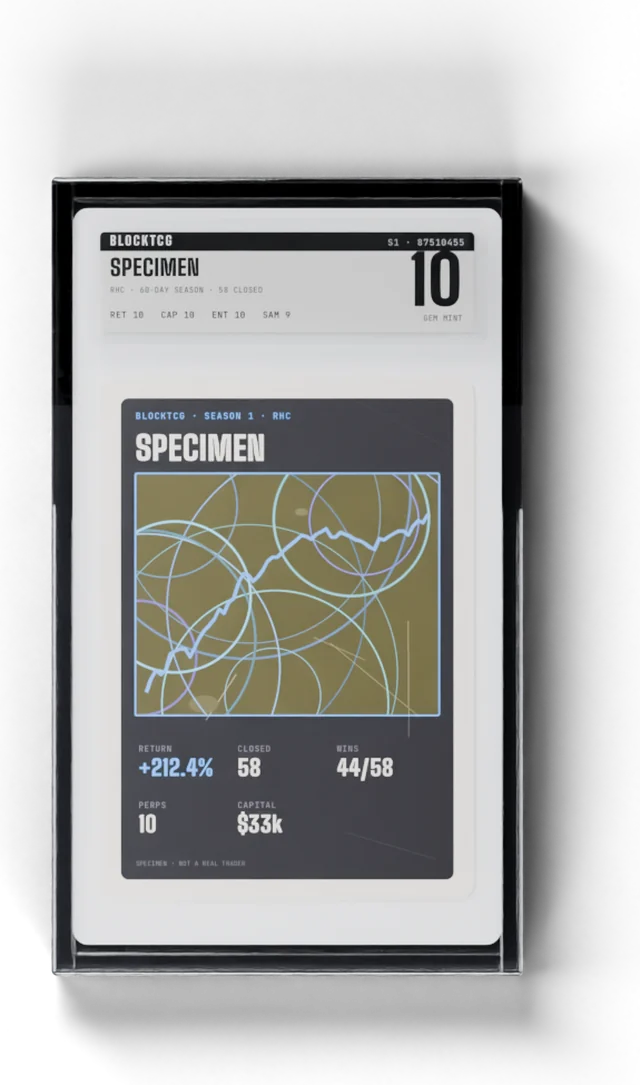
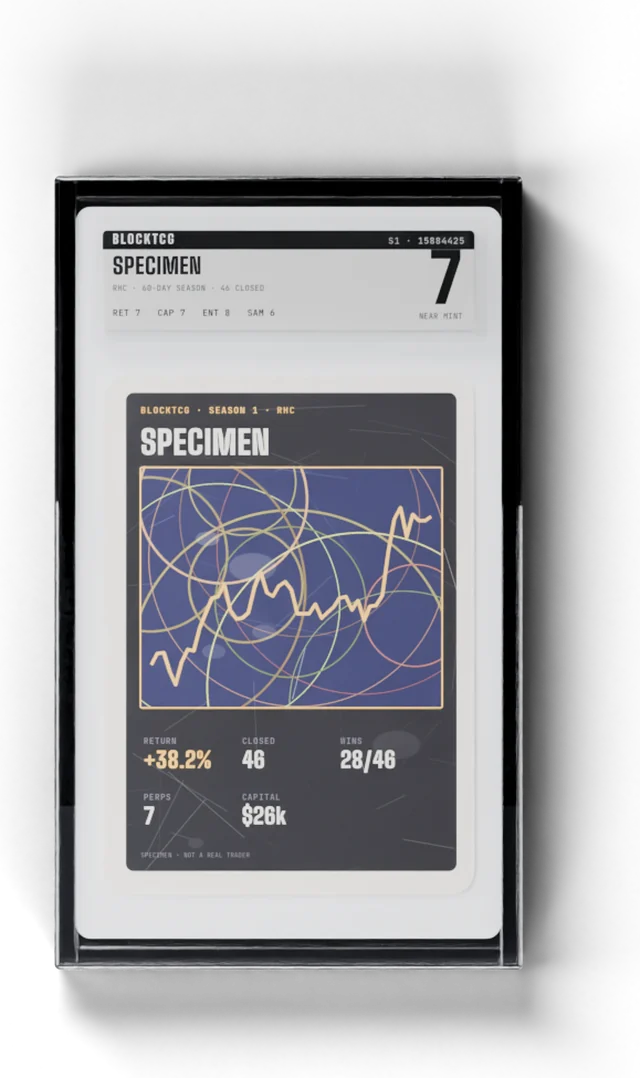
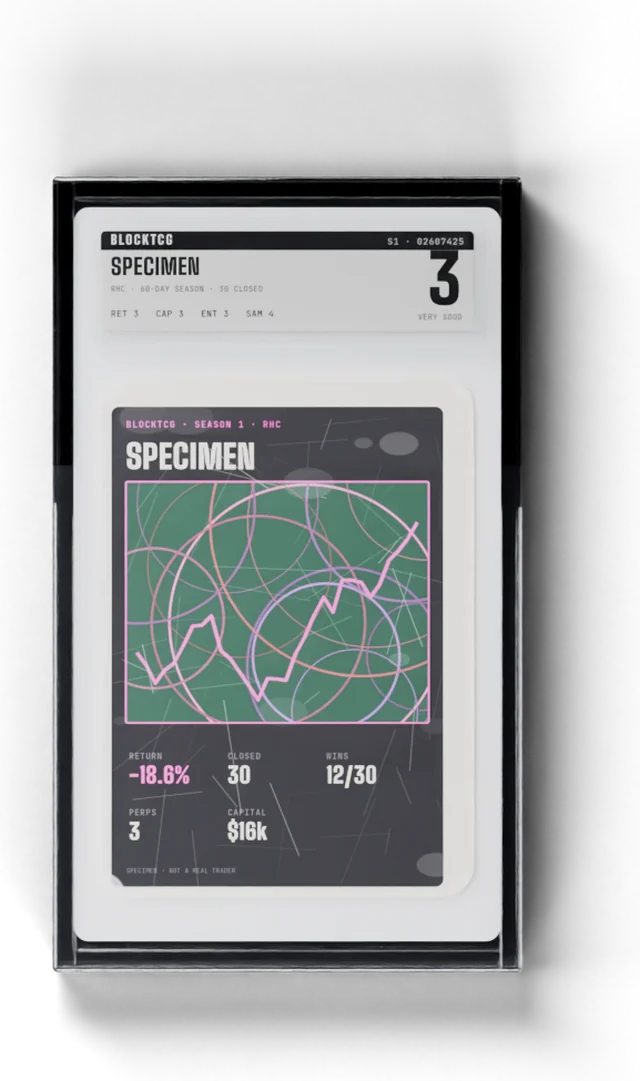
Profit on the capital actually put to work, spot and perps together. A weak season rounds the corners off.
How many positions were closed. A thin record scuffs the face, and it caps the grade: one lucky trade is not a 10.
How much of each move the trader kept. Printed on the label and worn into the edges; it doesn't set the grade.
How early they bought after a token launched. Shown as the print drifting off centre; it doesn't set the grade.
Sealed
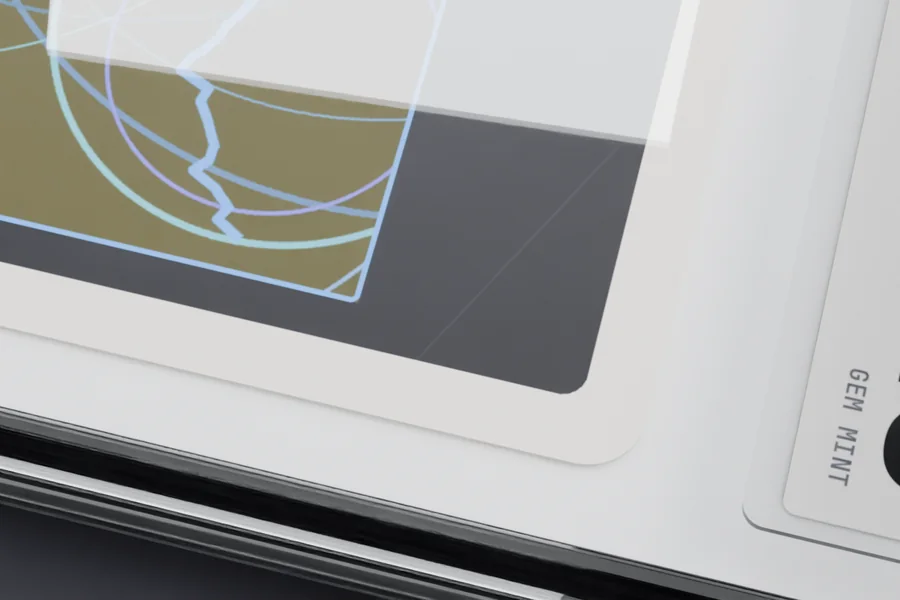
When the season closes, the record is graded and sealed into the slab's metadata. Nothing the trader does next can change it. That season happened, and the slab is proof of it.
Priced
Like any card, a slab trades at whatever collectors will pay: a famous name, a low pop, a grade that's hard to find. Every resale sends 10% to the trader's own vault, claimable by that wallet alone.
A season
Every swap on Robinhood Chain and every perp on Hyperliquid, for the traders in the pool, across a 60-day window. Losing records count.
Return on capital, capped by sample size. A $5,000 capital floor and ten closed positions to qualify.
Ten copies of each trader's slab per season, each with a cert number and its own ENS name.
Slabs come out of packs. The odds follow what's left in the box, and every draw uses drand's public randomness.
Who's on the label
Most wallets are anonymous, and the label respects that. A trader who proves the wallet is theirs can put a name on it.
Unclaimed. The default: the wallet, truncated. The record speaks for itself.
Claimed. The trader signs with the wallet and picks the name the label shows.
Named. A public trader whose positions are already known by name.
Names and wallets above are examples.
Pop report · Season 1 draft
The draft grading pass over 108 qualifying traders, measured in October 2026. Most records land in the low and middle grades; a 10 is rare by design. Ten copies of each will go in the box.
Traders by grade · draft, before the season is sealed
Packs
Every tier draws from the same box of slabs, and each pack is priced around the value of what's left in it. The odds are on-chain, and so is every draw.
Tiers as designed for Season 1. Final terms ship with the launch.
FAQ
Yes. Spot trades are read from Robinhood Chain itself and perps from Hyperliquid's public records. Nothing is self-reported.
Robinhood Chain for Season 1. Solana is planned for later.
No. A slab's grade is sealed when its season closes. The next season is a new slab.
No. A slab is a collectible record of one season. It is not a share of a trader, a wallet or anyone's results, and it pays nothing.
Claiming opens with Season 1: sign with your wallet to put a name on the label and to collect your 10% of every resale.
Season 1 is being graded now. The launch date will be posted here first.